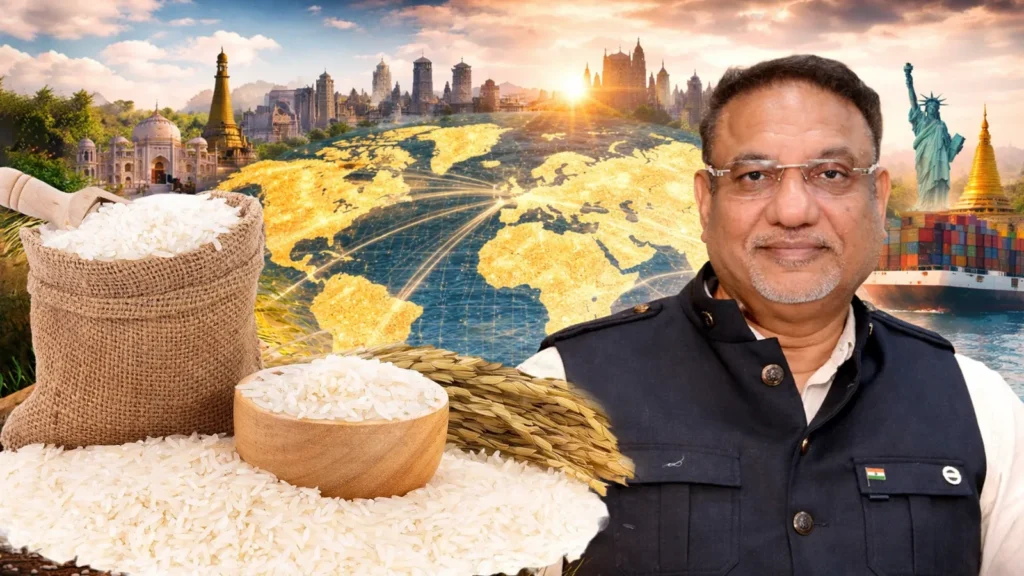
The growth story of Shri Lal Mahal Group is a powerful example of how Indian family businesses can scale globally while staying rooted in tradition. Founded in 1907, the group began as a small grain trading business serving Northern India. Today, it stands among India’s leading rice exporters, reaching markets across the world.
Post-independence marked a significant phase of expansion. The group diversified into flour mills, oil mills, and rice milling. In 1958, its first rice mill was established in Lakhimpur Kheri, Uttar Pradesh—an important milestone that shaped the group’s future focus on rice processing.
Dr. Prem Garg believes growth must be strategic and disciplined.
“Expansion should never be rushed. You must understand the product, the market, and your own capacity before growing,” he explains.
Currently, Shri Lal Mahal Group operates rice mills across Punjab, Haryana, Delhi, and Gujarat, with a daily production capacity of approximately 3,200 metric tons. Rice remains the core business, supported by select value-added products such as Kashmiri saffron and spices.
The group exports to 82 countries and has a clear ambition to expand to over 100 countries in the near future.
“Our goal is not just to sell rice, but to take Indian-origin products to every corner of the world,” says Dr. Garg.
One of the group’s flagship offerings, Shri Lal Mahal Empire Basmati Rice, reflects its commitment to quality and innovation. The product is sugar-free, low glycemic index, and recommended by doctors. Exported to 44 countries, it has positioned the brand as a premium basmati rice exporter from India.
Innovation remains central to future growth. With a dedicated R&D team of 27 professionals, the group continues to develop value-added food products to enhance exports and foreign exchange earnings.
“Innovation is the bridge between tradition and the future,” Dr. Garg believes.
The long-term vision is ambitious—to build Shri Lal Mahal Group into a $10 billion global food enterprise, while maintaining the values that have defined it for over a century.